

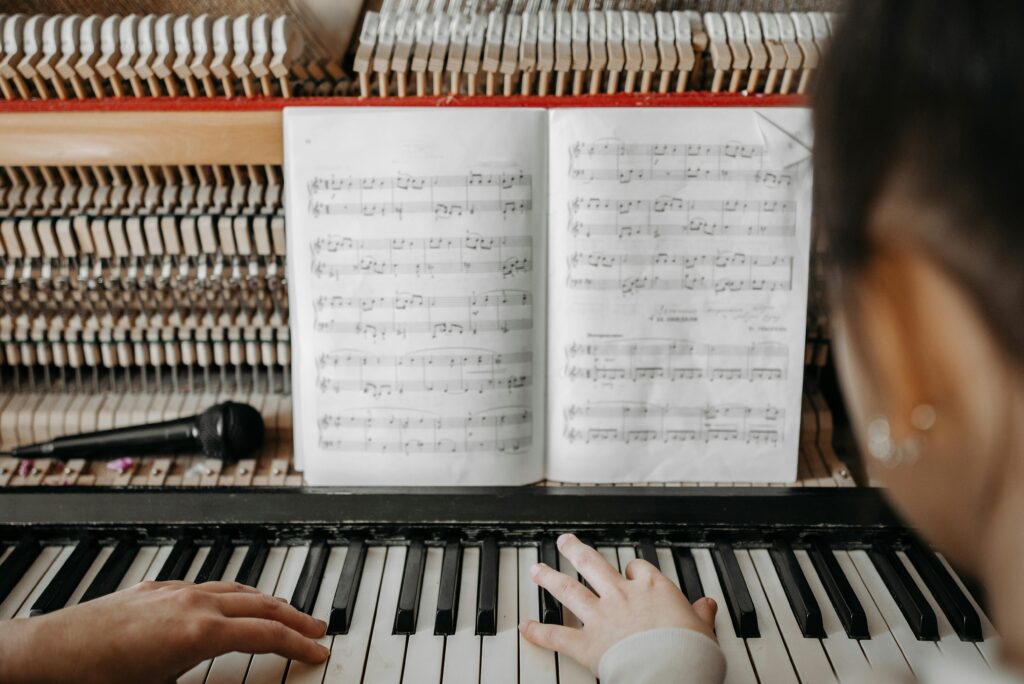
How to Read Music — A Beginner’s Guide
Author By : Rajab Ali
Introduction: Why Learning to Read Music Matters
Music is a universal language that connects cultures, emotions, and people across the world. While many people enjoy listening to music, learning how to read music opens an entirely new dimension of understanding and creativity. Reading music allows you to interpret written notes, play instruments accurately, sing with confidence, and communicate effectively with other musicians.
For beginners, sheet music may seem confusing at first—filled with lines, dots, symbols, and unfamiliar markings. However, just like learning to read a new language, music reading becomes simple and enjoyable once the basics are understood step by step.
This comprehensive beginner’s guide will teach you everything you need to know about reading music, from understanding the staff and notes to rhythm, time signatures, and essential musical symbols. Whether you want to play piano, guitar, violin, or simply improve your musical knowledge, this guide is designed to make learning easy and engaging.
What Is Sheet Music?
Sheet music is a written form of musical notation that represents:
Pitch (how high or low a note sounds)
Rhythm (how long a note is played)
Tempo (the speed of the music)
Expression (how the music should feel)
Musicians use sheet music as a roadmap to perform a piece accurately. Once you understand the symbols, you can play music written centuries ago or newly composed today.
The Musical Staff: The Foundation of Music Reading
What Is a Staff?
The musical staff is made up of:
5 horizontal lines
4 spaces between the lines
Each line and space represents a different musical note.
Why the Staff Matters
The staff helps musicians identify:
Pitch placement
Note relationships
Musical patterns
Without the staff, written music would be nearly impossible to read consistently.
Clefs: Understanding Where Notes Live
A clef appears at the beginning of the staff and determines which notes belong to each line and space.
1. Treble Clef (G Clef)
Used for higher-pitched sounds
Common for:
Right hand on piano
Guitar
Violin
Flute
Vocals
Treble clef line notes (bottom to top):
E – G – B – D – F
Memory trick: “Every Good Boy Deserves Food”
Treble clef spaces:
F – A – C – E
Spells the word “FACE”
2. Bass Clef (F Clef)
Used for lower-pitched sounds
Common for:
Left hand on piano
Bass guitar
Cello
Tuba
Bass clef line notes:
G – B – D – F – A
Memory trick: “Good Boys Do Fine Always”
Bass clef spaces:
A – C – E – G
Memory trick: “All Cows Eat Grass”
Musical Notes: Learning Pitch
The Musical Alphabet
Music uses seven letters:
A – B – C – D – E – F – G
After G, the sequence repeats again at a higher pitch.
Notes on the Staff
Notes placed higher on the staff sound higher
Notes placed lower sound lower
Each note is shown as a filled or empty oval, sometimes with a stem or flag.
Ledger Lines: Notes Beyond the Staff
When notes go higher or lower than the staff allows, ledger lines are used.
Short lines added above or below the staff
Allow for extended pitch range
Common in piano and vocal music
Note Durations: Understanding Rhythm
Rhythm tells you how long to play each note.
Common Note Values
Whole Note – 4 beats
Half Note – 2 beats
Quarter Note – 1 beat
Eighth Note – ½ beat
Sixteenth Note – ¼ beat
The faster the song, the quicker these beats pass.
Rests: Silence in Music
Rests show when not to play.
Types of Rests
Whole Rest – 4 beats of silence
Half Rest – 2 beats
Quarter Rest – 1 beat
Eighth Rest – ½ beat
Silence is just as important as sound in music.
Time Signatures: Organizing Music
The time signature appears at the beginning of a piece, right after the clef.
How to Read Time Signatures
Example: 4/4
Top number = beats per measure
Bottom number = note value that gets one beat
Common Time Signatures
4/4 – Most popular (pop, rock, classical)
3/4 – Waltz feel
2/4 – March-style rhythm
6/8 – Flowing, compound rhythm
Measures and Bar Lines
Measures divide music into sections
Bar lines separate measures
Help musicians stay in time and organized
Key Signatures: Understanding Sharp and Flat Keys
Key signatures appear after the clef and tell you:
Which notes are sharp (#)
Which notes are flat (♭)
Sharps (#)
Raise a note by a half step
Flats (♭)
Lower a note by a half step
Key signatures prevent repeated accidentals throughout the music.
Accidentals: Temporary Pitch Changes
Accidentals affect notes within a measure only:
Sharp (#)
Flat (♭)
Natural (♮)
They override the key signature temporarily.
Dynamics: Playing with Expression
Dynamics tell you how loud or soft to play.
Common Dynamic Markings
pp – Very soft
p – Soft
mp – Medium soft
mf – Medium loud
f – Loud
ff – Very loud
Tempo Markings: Speed of Music
Tempo tells you how fast or slow to play.
Common Tempo Terms
Largo – Very slow
Andante – Walking speed
Moderato – Moderate
Allegro – Fast
Presto – Very fast
Articulation: How Notes Are Played
Articulation symbols affect note style:
Staccato – Short and detached
Legato – Smooth and connected
Accent – Emphasized note
How to Practice Reading Music Effectively
Beginner Practice Tips
Practice 10–20 minutes daily
Clap rhythms before playing
Say note names out loud
Use flashcards for notes
Start slow, then increase tempo
Consistency matters more than speed.
Common Beginner Mistakes to Avoid
Skipping rhythm practice
Ignoring key signatures
Playing too fast
Not counting beats
Avoiding sight-reading
Mistakes are part of learning—embrace them.
Benefits of Learning to Read Music
Faster learning of songs
Better musical understanding
Improved memory and focus
Easier collaboration with musicians
Strong foundation for composing
Frequently Asked Questions (FAQs)
Is reading music hard for beginners?
No. With proper guidance and daily practice, anyone can learn.
Do I need to read music to play instruments?
Not always, but it greatly improves accuracy and growth.
How long does it take to learn?
Basic reading skills can be learned in a few weeks.
Conclusion: Your Musical Journey Starts Here
Learning how to read music is one of the most rewarding skills a musician can develop. It transforms random sounds into meaningful patterns and allows you to fully understand and express music. With patience, practice, and the right approach, music reading becomes natural and enjoyable.
Whether you dream of playing an instrument, composing songs, or simply appreciating music on a deeper level, mastering music notation is the first step toward musical freedom.
Leave a Reply